


Latest news
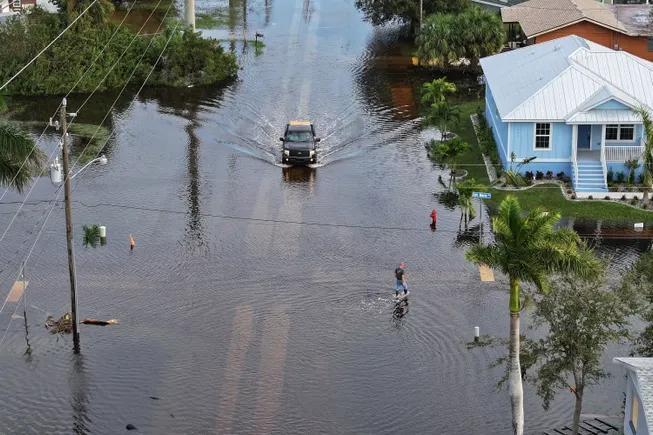
Florida Attorney General James Uthmeier sued First Street Technology in October, alleging the company's climate risk scores violate the Florida Deceptive and Unfair Trade Practices Act. The complaint claims the scores are misleading, based on faulty risk factors, and cause Florida homes to sell slower and for less. Uthmeier accuses First Street of 'climate chicanery' and marketing fear to advance a climate activism agenda. The lawsuit targets First Street's 'Risk Factor' product, which assesses flood, fire, air quality, and heat risks, and alleges the company uses its presence on real estate sites like Zillow, Redfin, and Realtor.com to sell paid property-specific climate risk reports. The suit also notes discrepancies between First Street's flood risk data and FEMA's maps, and claims First Street's peer-review claims are deceptive. First Street was acquired by MSCI this year. The lawsuit seeks a jury trial, injunctive relief, and civil penalties.
Amazon CEO Andy Jassy said Thursday that the high cost of AI inference computing could limit broader enterprise adoption of artificial intelligence. Speaking on Amazon's third-quarter earnings call, Jassy identified inference costs and a shortage of skilled employees as obstacles, and stressed the need to lower inference costs. He noted inference already accounts for well over half of AWS' AI revenue, and Amazon is developing custom silicon like Trainium chips to reduce expenses. Gartner forecasts inference will make up 55% of global AI-optimized infrastructure-as-a-service spending in 2026, reaching $23.3 billion. Amazon reported Q3 net sales of $201.9 billion, up 12% year over year, with AWS revenue climbing 39.3% to $46 billion, though its Q4 revenue forecast came in slightly below Wall Street expectations.

In this opinion piece, Katie Martin, director of sustainability and innovation at Avetta, explains that supply chain ESG risk management has historically been reactive, treating sustainability as a compliance exercise. With complex global networks and shifting regulations, reacting quickly is insufficient. A case of a retailer facing citations for unsafe working conditions and wage violations led to reputational and financial damage, prompting companies to embed risk management into daily operations and strategy. Siloed ESG responsibilities cause inefficiencies and blind spots, while shared responsibility and visibility across procurement, sustainability, legal and compliance enable earlier risk identification, evidence-based progress reporting, and anticipation of evolving expectations. Companies investing in shared visibility gain competitive advantage, reduce total cost of ownership, and avoid reputational risk. The article cites a large retailer implementing a cross-functional ESG governance model with executive and board oversight, integrating climate risks into enterprise risk management, and working with suppliers on energy, packaging, waste, transportation, product design and nature issues, resulting in quantifiable cost savings. The shift requires breaking down data silos but yields benefits that outweigh the effort.

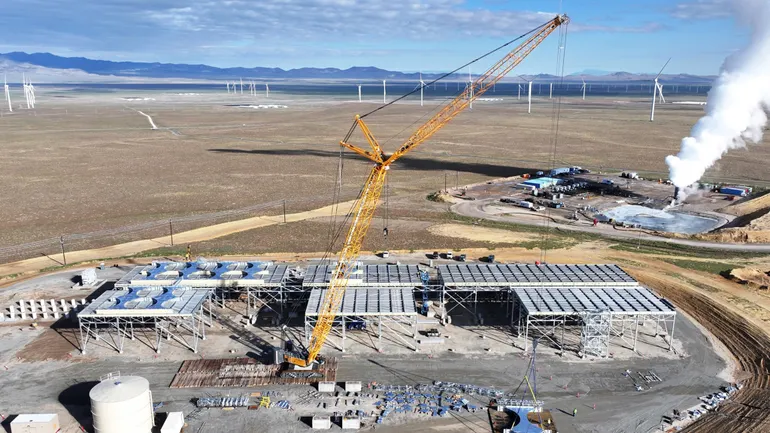
Fervo Energy announced on Tuesday a 396 MW geothermal power purchase agreement with Google, the largest geothermal PPA in history, which Google plans to use for a potential data center in Utah. The agreement includes an option to expand by approximately 600 MW, totaling nearly 1 GW. Analysts noted that the deal underscores baseload power scarcity, but Fervo's stock has recently faced pressure due to execution risks.

The latest Gartner survey reveals that despite widespread AI adoption efforts, fewer than a quarter (22%) of enterprises have successfully scaled AI across multiple business units. The survey covered over 1,300 leaders from organizations with annual revenue exceeding $50 million. Meanwhile, 85% of technology leaders plan to increase AI investment next year, but about 11% of organizations lack visibility into their 2025 AI spending. Experts warn that without rigorous measurement tied to business outcomes, resources may be wasted and expectations may fall short.

The Lowe's Foundation announced the formation of the 'Building Future Skilled Trades Alliance' with nearly 80 companies and organizations, including Bank of America, AT&T, and NVIDIA, planning to train 1 million skilled trades workers by 2035. The alliance is described as the largest cross-industry skilled trades coalition in U.S. history, aimed at addressing an anticipated shortage of up to 2.1 million skilled trades positions.

Ryder's 2026 e-commerce consumer research shows that consumer preferences for e-commerce packaging are shifting from a pure focus on low prices to a balance of environmental friendliness and experience. Compared with 2025, the proportion of consumers choosing corrugated boxes who recognize their "eco-friendly" attribute rose by 6 percentage points, and the proportion citing packaging sustainability as a driver of repeat purchases also increased by 6 percentage points.

The global carbon market is entering a critical phase, with governments expanding carbon pricing schemes, companies pursuing emission reduction targets, and the Paris Agreement supporting cross-border transfers of carbon assets. However, the legal infrastructure underpinning this market remains fragmented. Carbon credits are increasingly flowing across borders, but the laws governing their creation, ownership, transfer, and use remain confined to the national level. Regulators are also scrutinizing environmental claims involving carbon credits. Companies should focus on three major issues: the legal status and ownership of carbon credits, environmental integrity and accounting and claims risks, and the allocation of regulatory and performance risks in carbon contracts.

CheckSammy has expanded its ZeroPoint Facility network from two to four locations, with new sites in Indianapolis, Indiana, and Lakeland, Florida. The expansion responds to surging demand for secure, data-backed recycling and diversion services, with additional facilities planned for 2026 in North America, Europe, and the Middle East.