


Corporate Governance

The latest Gartner survey reveals that despite widespread AI adoption efforts, fewer than a quarter (22%) of enterprises have successfully scaled AI across multiple business units. The survey covered over 1,300 leaders from organizations with annual revenue exceeding $50 million. Meanwhile, 85% of technology leaders plan to increase AI investment next year, but about 11% of organizations lack visibility into their 2025 AI spending. Experts warn that without rigorous measurement tied to business outcomes, resources may be wasted and expectations may fall short.

The Lowe's Foundation announced the formation of the 'Building Future Skilled Trades Alliance' with nearly 80 companies and organizations, including Bank of America, AT&T, and NVIDIA, planning to train 1 million skilled trades workers by 2035. The alliance is described as the largest cross-industry skilled trades coalition in U.S. history, aimed at addressing an anticipated shortage of up to 2.1 million skilled trades positions.

As enterprises move beyond initial AI deployment, executives are grappling with a fundamental question: can the technology be trusted to deliver consistent business outcomes? A recent report from HFS Research and TCS, surveying over 100 C-suite and technology executives in the U.S. and Canada, finds that only 1 in 3 respondents believe AI consistently delivers intended outcomes, remains under control, and earns stakeholder confidence. The findings underscore a shift toward more cautious AI adoption, driven by rising costs, workforce skill gaps, and regulatory uncertainty.

The Conference Board's Employment Trends Index increased in July, suggesting continued resilience in the labor market, according to economic data scientist Conrad Qi. The rebound followed declines in May and June, but year-over-year growth remains modest at 0.6%.
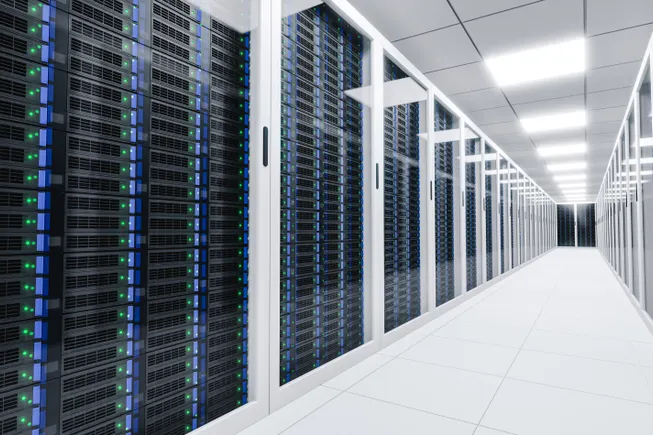
As AI adoption surges, U.S. data center electricity use is projected to double by 2028 and grow 300% over the next decade. Pado AI CEO Wannie Park argues that legacy data centers—typically under 100 MW—hold vast untapped power capacity. In an interview with ESG Dive, he explains how optimizing existing infrastructure, rather than building new facilities, could bridge the gap, citing GPU utilization rates as low as 12% and the need for grid-aware compute management.