


Latest news

A survey of 124 senior sustainability professionals shows that compliance and reporting have become the core work of teams in this field, despite continued budget and staffing cuts. The proportion citing regulatory requirements as a driver has doubled to 76% over the past decade, while CEO engagement has dropped from 55% to 36%. The report recommends that teams reflect on their enabling role within companies and remain vigilant about the social and environmental risks posed by AI.

The Greenhouse Gas Protocol (GHG Protocol) and the International Organization for Standardization (ISO) announced on July 29 that they will merge their carbon emission accounting standards to create a unified global corporate carbon accounting standard. The merger plan covers GHG Protocol's Scope 1, 2, and 3 standards and the Actions and Market Instruments workstream, integrating with the ISO 14064-1 standard. The draft is expected to be released in the second quarter of 2027, with the final standard planned for the fourth quarter of 2028.

Under political and social pressure, many organizations are scaling back diversity, equity, and inclusion (DEI) initiatives, believing this reduces risk, but it may backfire. The U.S. Equal Employment Opportunity Commission (EEOC) continues to enforce anti-discrimination protections for women, and recent settlement cases show that compliance obligations have not changed. This article analyzes the relevant legal risks and proposes eight best practices based on EEOC guidelines to help HR leaders build equitable workplaces.

Against the backdrop of federal climate policy regression, New York State continues to advance corporate climate disclosure legislation, but Governor Hochul has recently proposed relaxing the 2030 emission reduction targets, citing costs and feasibility. This article summarizes relevant bill progress, target revisions, and the moratorium on data centers.
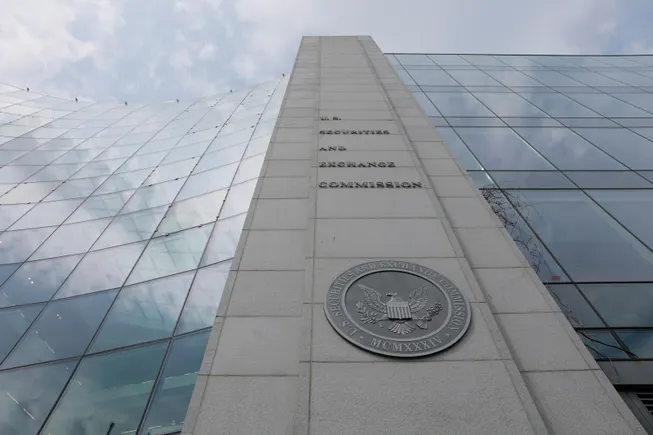
The SEC plans to amend shareholder proposal rules this year, drawing opposition from a coalition of investor advocates. The coalition filed a petition to 'largely retain' the rules and restore the no-action process, while also proposing measures such as a mandatory two-week engagement period.

Global sustainability disclosure requirements are evolving at unprecedented speed, breadth, and political variability, with policy divergence at the U.S. federal and state levels, simplification of rules in the EU, and adoption of unified frameworks by multiple countries. Facing a fragmented regulatory environment, companies should treat reporting as a value-adding capability rather than a compliance burden, orienting toward stakeholder needs and establishing third-party assured disclosure systems to enhance resilience, optimize decision-making, and gain competitive advantage.

The second-hand technology market is expected to reach $262 billion by 2032. Companies need to shift the circular economy from a reporting obligation to a strategic core to balance sustainability and profitability.

This article explores how growing data center demand can act as a catalyst for the large-scale deployment of climate technologies. Through principles such as project co-location, energy park development, and operating during surplus grid periods, data centers and climate technologies can mutually benefit, improving project economics and accelerating the clean energy transition.
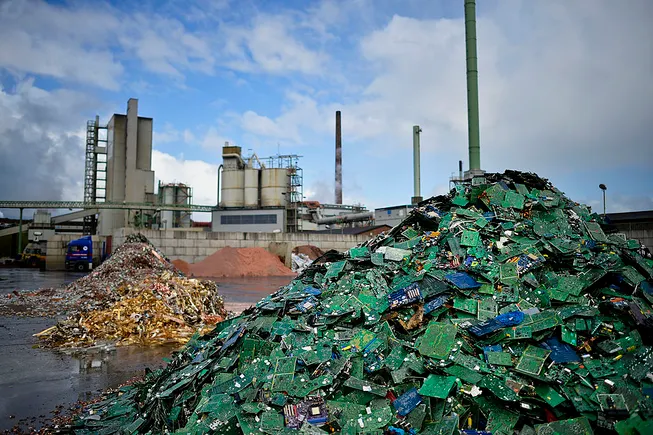
As 'invisible infrastructure,' advanced filtration technology is solving the recycling challenges of complex waste streams such as smartphone screens, aviation fuel, and electric vehicle batteries. This article, from the perspective of Pall Corporation experts, explores the application of this technology across five key industries, demonstrating how it achieves circular economy benefits without compromising product performance.

U.S. public pensions remain insufficient in addressing climate risks. The Sierra Club analysis points out that most large pensions lack clear strategies to direct capital toward climate solutions, and there are issues such as greenwashing and an overemphasis on clean energy.